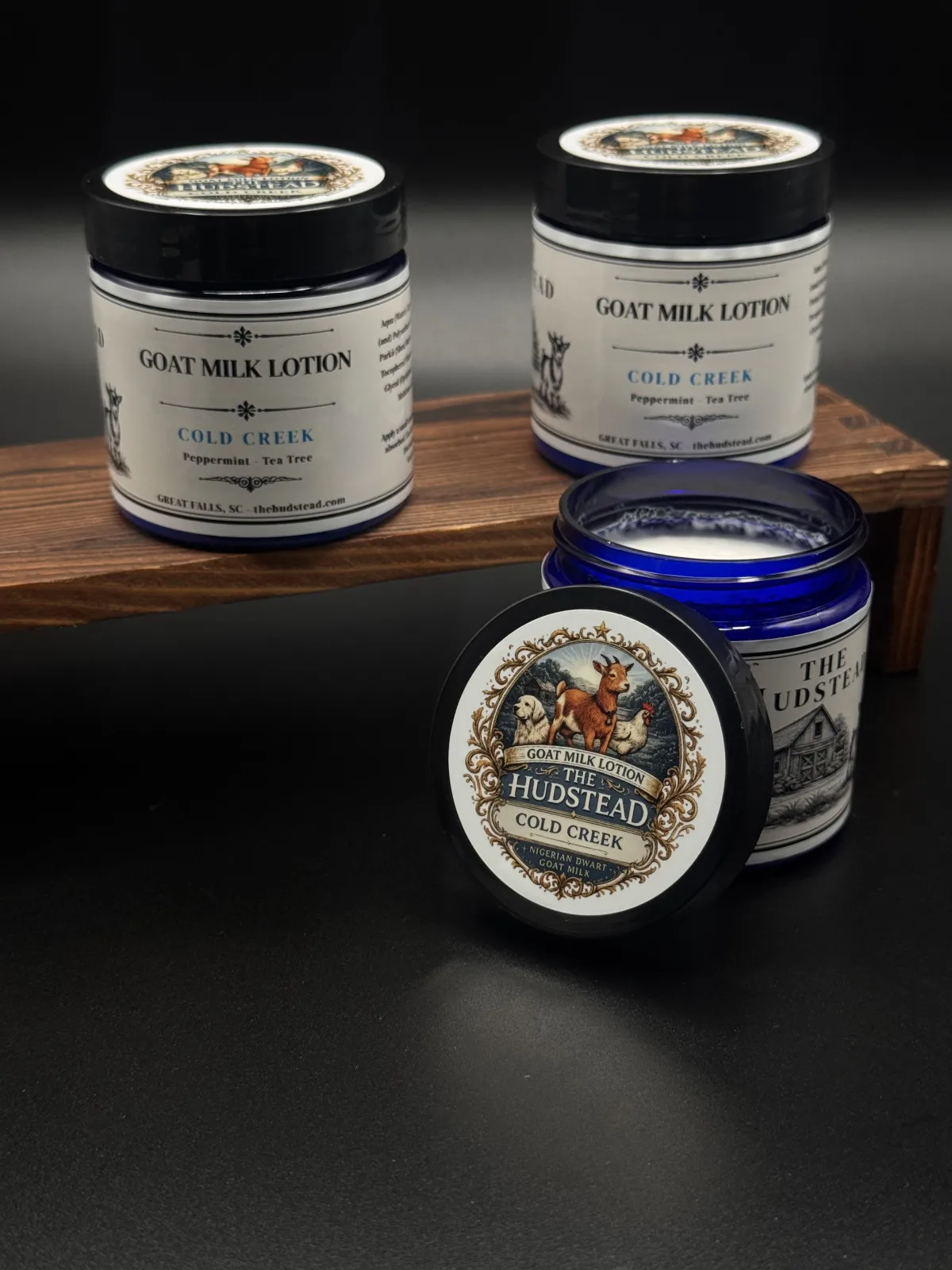
Meet the Nigerian Dwarf Goats Behind The Hudstead
Our Nigerian Dwarf goats are the reason we make what we make. They give us the milk that goes into every bar of soap, every bottle of shampoo, and a good bit of the joy that keeps us farming. Without them, The Hudstead would be missing its heart.
We moved to Great Falls from Myrtle Beach over five years ago looking for something quieter and more real. The goats came into the picture as we figured out what our farm would become. Today they are part of the daily rhythm here, right alongside the guardian puppies, the chickens, and the eggs we gather each morning.
What makes Nigerian Dwarf goats different
Nigerian Dwarf goats are small. An adult doe stands about twenty inches at the shoulder and weighs maybe seventy-five pounds. That size makes them easier to handle than standard dairy breeds, which matters when you are milking twice a day and managing a herd by yourself or with family help.
Despite their size, Nigerian Dwarfs produce milk with high butterfat content. That richness is what makes our goat milk soap feel the way it does on your skin. The milk is naturally creamy, and it holds the lather together without needing a list of things you cannot pronounce.
Their temperament is another reason we chose this breed. Nigerian Dwarfs are curious, friendly, and loud when they want your attention. They have opinions about feeding time and visitors and who gets to stand where in the barn. It makes for a lively morning.
How we care for our herd
The goats live in a barn with access to pasture. They browse more than they graze, which means they prefer weeds, brush, and the leaves off low branches to plain grass. We let them pick through what grows here and supplement with hay and grain to keep their nutrition balanced.
Water is always available, and we check it twice a day. Goats will not drink dirty water, and they will tell you about it if the bucket is empty. Hoof care happens every few months. We trim hooves to prevent problems and check for any sign of injury or infection.
Our Great Pyrenees and Anatolian Shepherd guardian dogs live with the goats. These dogs were bred to protect livestock, and they take that work seriously. Predators are a real concern in rural South Carolina. The dogs give us peace of mind and the goats a chance to live without constant fear.
Milking and what we do with it
We milk our does twice a day during their lactation cycle. A doe comes into milk after she kids, and that cycle lasts about ten months if we continue milking. The process is simple but not fast. Each goat gets her turn on the stand, and we work by hand.
The milk goes straight into the kitchen, where it gets strained and chilled. From there it becomes soap. We make small batches so nothing sits around losing freshness. The milk adds a creamy quality to the bar and a gentleness that people with sensitive skin notice right away.
Every product we sell that contains goat milk contains milk from our herd. That includes bars like Cold Creek, Purple Fields, and Field Hand, along with our shampoo and conditioner. The goats are not just suppliers. They are part of what makes this farm what it is.
The personalities in the herd
Each goat has a personality. Some does are bold and will push to the front of the line at feeding time. Others hang back and wait for the chaos to settle. We have a few who will climb anything that looks climbable, which is most things if you are a goat.
Kids are born in the spring, and for a few weeks the farm is loud with bleating and the sound of small hooves on wood. The does are attentive mothers. We step in only when needed, and mostly we watch to make sure everyone is nursing and healthy.
Visitors always want to see the goats. They are photogenic and friendly, and they have no problem walking up to a fence to say hello. Children especially love them, which is why we named one of our soaps Baby Pail. It is unscented and gentle enough for the smallest hands, the kind of soap you would use on a child who has spent the morning petting goats.
Why we farm with goats
We farm with Nigerian Dwarf goats because they fit the scale of what we do here. We are not running a commercial dairy. We are making soap and other products for families who want to know where things come from. The goats give us enough milk to do that work without requiring infrastructure we do not have.
They also connect us to the land in a way that feels right. Goats are browsers, so they help manage overgrowth. They produce fertility for the soil. They give us a reason to be outside in all weather, which keeps us honest about what farming actually requires.
Mostly, though, we farm with goats because we like them. They are clever and stubborn and full of life. They make us laugh on hard days, and they give us something worth sharing with the people who buy from us.
Questions people ask
Do Nigerian Dwarf goats smell bad?
Does do not smell. Bucks in rut have a strong odor, which is why many small farms keep does only or house bucks separately. Our does are clean animals, and if you keep their living area maintained, there is no bad smell.
How much milk does a Nigerian Dwarf goat produce?
A doe in milk typically produces between one and two quarts per day. That is much less than a standard dairy breed, but the milk is richer and the goat is easier to manage on a small farm.
Can you visit the goats at The Hudstead?
We welcome visitors who want to see where their soap comes from. Reach out to us ahead of time so we can arrange a day that works. The goats enjoy the attention, and we enjoy showing people what we do here in Great Falls.