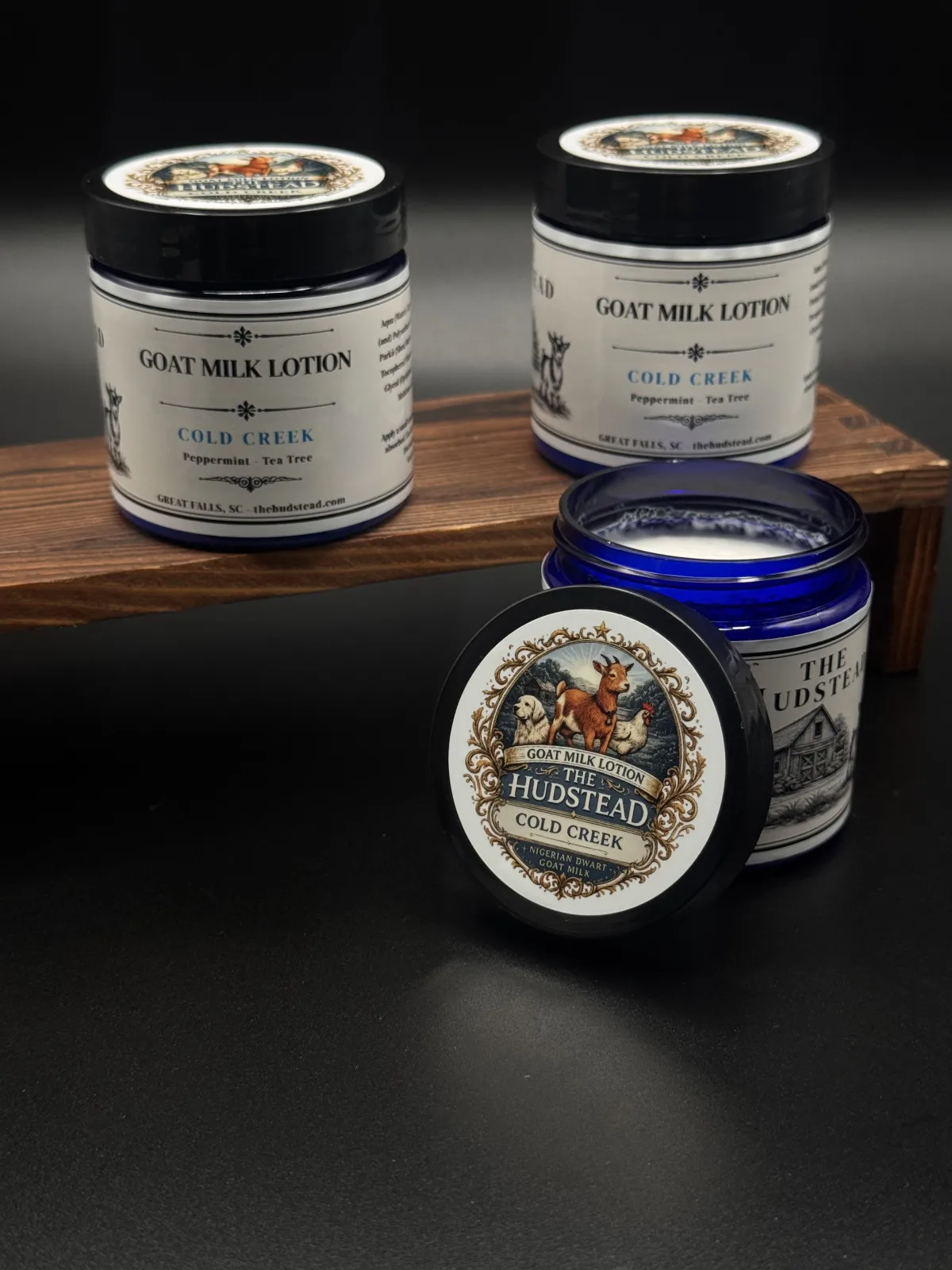
From Goat to Jar: How We Make Goat Milk Lotion on Our Farm
People ask us what goes into making our goat milk lotion. The short answer is fresh milk, time, and attention. The longer answer is worth telling because it explains why lotion made on a farm is different from what you find in most stores.
We make our lotion the same way we do everything else here. We start with what our goats give us, we keep the ingredient list short, and we take the time to do it right.
It Starts in the Barn
Our Nigerian Dwarf goats are the beginning of every jar. We milk them twice a day, morning and evening. The milk goes straight from the milking stand into stainless containers, then into refrigeration.
Fresh matters. We use milk within a day or two of milking. It hasn't been sitting in a warehouse or shipped across states. The goats are here, the milk is here, and we make the lotion here.
Nigerian Dwarf milk is higher in butterfat than milk from larger dairy breeds. That fat content is what makes it work so well in lotion. It absorbs without leaving a greasy film.
Mixing the Base
We make our lotion in small batches in the farm kitchen. Every batch starts with heating the milk gently. Too much heat and you lose what makes goat milk special. Not enough and the lotion won't emulsify properly.
We add oils while the milk is warm. We use cold-pressed argan oil in our First Light lotion because it doesn't clog pores and it carries the other ingredients well. Some batches get shea butter for extra moisture.
The mixing takes longer than you might think. We're combining water-based and oil-based ingredients, and they don't want to stay together. We use an emulsifying wax derived from plants to hold everything in suspension. Then we mix. And mix. And keep mixing until the texture is right.
Why We Don't Rush It
The mixture has to cool to a specific temperature before we add preservative and any scent. Too warm and the preservative breaks down. Too cool and it won't distribute evenly through the batch.
We use a broad-spectrum preservative because lotion contains water, and water-based products can harbor bacteria without one. We'd rather be honest about that than pretend a product with water in it can stay safe without preservation.
If we're making a scented batch, this is when we add essential oils or fragrance. We measure carefully. The goal is a lotion that has a scent when you open the jar but doesn't announce itself across a room.
Testing and Filling
Before we fill jars, we test the batch. We check the consistency, make sure it absorbed the way we want it to, and confirm the scent level is right. If something is off, we adjust it before it goes into containers.
We fill jars by hand. We label them by hand. We check each one before it goes on the shelf or into a shipment. This is a small operation and we keep it that way on purpose.
Every jar gets a batch number written on it. If someone ever has a question or a problem, we can trace that jar back to the exact day we made it and the exact goats whose milk went into it.
What We Leave Out
Our ingredient list is shorter than most commercial lotions. We don't use parabens. We don't add synthetic colors. We don't put in fillers to make the product cheaper to produce.
The base is goat milk, oils, emulsifying wax, and preservative. That's what makes it work. Everything else is optional.
We're not trying to make a product that lasts five years on a shelf. We're making something that works well and gets used up. There's a difference.
Why Make It This Way
We moved to Great Falls over five years ago because we wanted a different kind of life. Making lotion this way is part of that life. It's slower, it's more work, and it means we'll never make thousands of jars a week.
But it also means we know exactly what goes into every jar. It means when someone tells us our lotion helped with their dry hands or their child's sensitive skin, we know why. The ingredients are real, the process is straightforward, and we're not cutting corners to save money or time.
The goats are outside right now. The kitchen where we make lotion is twenty feet from where I'm sitting. This is how we do it, and it's how we'll keep doing it.
Questions People Ask
How long does homemade goat milk lotion last?
Our lotion stays good for six to eight months when stored properly. Keep the lid on tight between uses and don't leave it in a hot car. The preservative we use is effective, but lotion made in small batches has a shorter shelf life than mass-produced versions with synthetic stabilizers.
Why does goat milk work well in lotion?
Goat milk contains fatty acids and triglycerides that are similar to what's in human skin. It absorbs easily and doesn't leave a heavy residue. People with dry or sensitive skin often choose goat milk products because the milk itself is moisturizing without added thickeners.
Do you use milk from all your goats?
We use milk from our Nigerian Dwarf does when they're in production. Not every goat is milking at the same time. Does produce milk after they have kids, and we milk them for several months before giving them a rest before their next breeding. The milk in any given batch comes from whichever does are currently in milk.