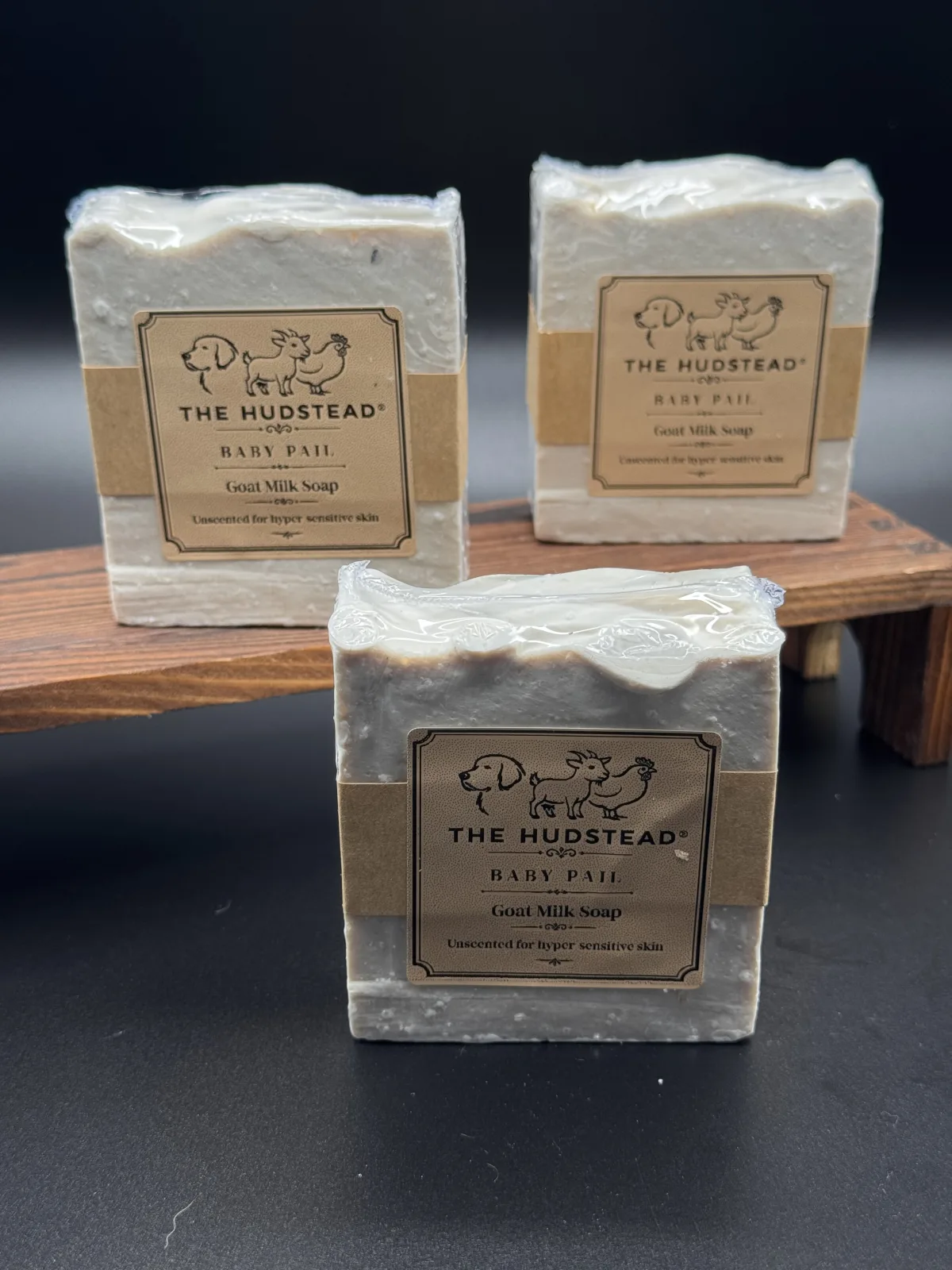
Goat Milk Soap for Eczema: What We've Learned on Our Farm
People with eczema contact us often. They're tired of soap that stings, dries out their skin, or makes the itching worse. They've heard goat milk soap might be different. Sometimes they're skeptical. Sometimes they're desperate. Most of the time, they just want something that won't make a hard day harder.
We make goat milk soap here at our farm in Great Falls with milk from our Nigerian Dwarf goats. We're not doctors, and we don't claim our soap treats or cures eczema. What we can tell you is why people with eczema and other sensitive skin concerns choose goat milk soap, what the research says about the ingredients, and what we've learned making it for five years.
Why goat milk soap is different from store-bought bars
Most commercial soap isn't actually soap. It's detergent. The label will say "beauty bar" or "cleansing bar" because legally it can't be called soap. Detergents strip oil from skin fast and completely. That's the point. But if you have eczema, your skin barrier is already compromised. You don't need more stripped away.
Real soap is made through saponification. Fats react with lye to create soap and glycerin. The glycerin stays in the bar, which is one reason handmade soap feels different. Commercial soap makers often remove the glycerin to sell separately because it's valuable. Without it, the bar is harsher.
Goat milk adds another layer of difference. The milk itself contains fat, and that fat becomes part of the soap. The result is a bar that cleans without the tight, dry feeling many people with eczema dread.
What's in goat milk that matters for sensitive skin
Goat milk contains lactic acid, a gentle alpha hydroxy acid. Lactic acid is used in skin care because it helps remove dead skin cells without scrubbing. For someone with eczema, that can mean less flaking and a smoother surface, though everyone's skin responds differently.
The fat content in goat milk is significant. Our Nigerian Dwarf goats produce milk with a high butterfat percentage. When that milk goes into soap, it creates a bar with natural moisturizing properties. The fat doesn't just sit on top of your skin. It's part of the soap structure.
Goat milk also contains vitamins and minerals. Vitamin A is present in higher amounts than in cow milk. Vitamin A is known to support skin health, which is why you see it in many skin creams. Selenium, also found in goat milk, is an antioxidant that people often seek out for skin support.
One more thing matters: goat milk has a pH closer to human skin than cow milk does. Human skin sits around 5.5 on the pH scale. Goat milk is near that range. A soap made with goat milk will still be alkaline because all soap is, but the milk helps moderate that alkalinity.
What we don't put in our soap
For people with eczema, what's not in soap can matter as much as what is. We don't use synthetic fragrances, which are a common trigger. Our unscented option, Baby Pail, has nothing added beyond the milk and oils. No fragrance, no colorant, no extras. Some of our other bars use essential oils, but the ingredient list is short and we can tell you exactly what's in each one.
We also don't add sulfates, parabens, or synthetic detergents. There's no need. The saponification process creates a bar that cleans. We let it do its job without adding chemicals that might irritate already angry skin.
How to use goat milk soap if you have eczema
Start with unscented. Even natural essential oils can irritate some people during a flare-up. Our Baby Pail bar was made with the most sensitive skin in mind, but adults with eczema use it too.
Use lukewarm water, not hot. Hot water feels good in the moment but it strips natural oils and can trigger itching later. Lather the soap in your hands or a soft cloth, apply gently, and rinse well. Pat dry instead of rubbing.
Follow up with a good moisturizer while your skin is still damp. Goat milk soap is gentler than detergent bars, but soap by nature is a cleanser. If you have eczema, your skin needs moisture added back after washing. That's true no matter what soap you use.
Give it time. If you've been using commercial bars with synthetic ingredients, your skin may need a few weeks to adjust. Some people tell us they noticed a difference immediately. Others say it took consistent use over a month. Skin is individual.
What people with eczema tell us
We hear from customers regularly. One woman told us she could finally wash her hands at work without them cracking by afternoon. A father said our unscented bar was the first soap his daughter would use without crying. A man with eczema on his elbows said the itching calmed down after he switched.
We also hear from people who tried goat milk soap and didn't see a change. Eczema is complex. It has triggers that range from stress to pollen to food. Soap is only one small part of managing it. We're glad when our soap helps, and we understand when it doesn't.
Why we keep making it
Five years ago, we left Myrtle Beach for a quieter life in Great Falls. We got Nigerian Dwarf goats, started making soap, and learned as we went. The goats produce rich milk. We had more than we could use. Soap made sense.
What keeps us making it is the feedback. When someone tells us they can shower without pain, or their child's skin stopped bleeding at the knuckles, or they're not embarrassed to shake hands anymore, that matters. We're not curing anyone. We're just making a gentler bar of soap. But sometimes a gentler bar is enough to make a hard thing a little easier.
Our farm is small. We know our goats by name. We make soap in small batches and we check every bar. If you have eczema and you're looking for something that won't make it worse, we'd be glad to be part of what you try.
Questions people ask
Will goat milk soap cure my eczema?
No. Eczema is a chronic condition that usually requires management from multiple angles. Goat milk soap may be gentler on your skin than commercial detergent bars, and some people find it reduces irritation, but it's not a cure. If your eczema is severe or worsening, see a dermatologist.
Should I use scented or unscented goat milk soap if I have eczema?
Start with unscented, especially during a flare-up. Even natural essential oils can irritate compromised skin. Our Baby Pail bar has no added fragrance or color. Once your skin calms down, you can try a lightly scented bar if you want to, but unscented is the safer choice for sensitive skin.
How long does a bar of goat milk soap last?
It depends on how you store it and how often you use it. Keep the bar dry between uses on a soap dish with drainage. A well-drained bar can last four to six weeks with daily use. If it sits in water, it will dissolve faster. Our Soap Saver Dish helps with that.