Baby Pail Unscented Goat Milk Soap: Gentle Care for Delicate Skin
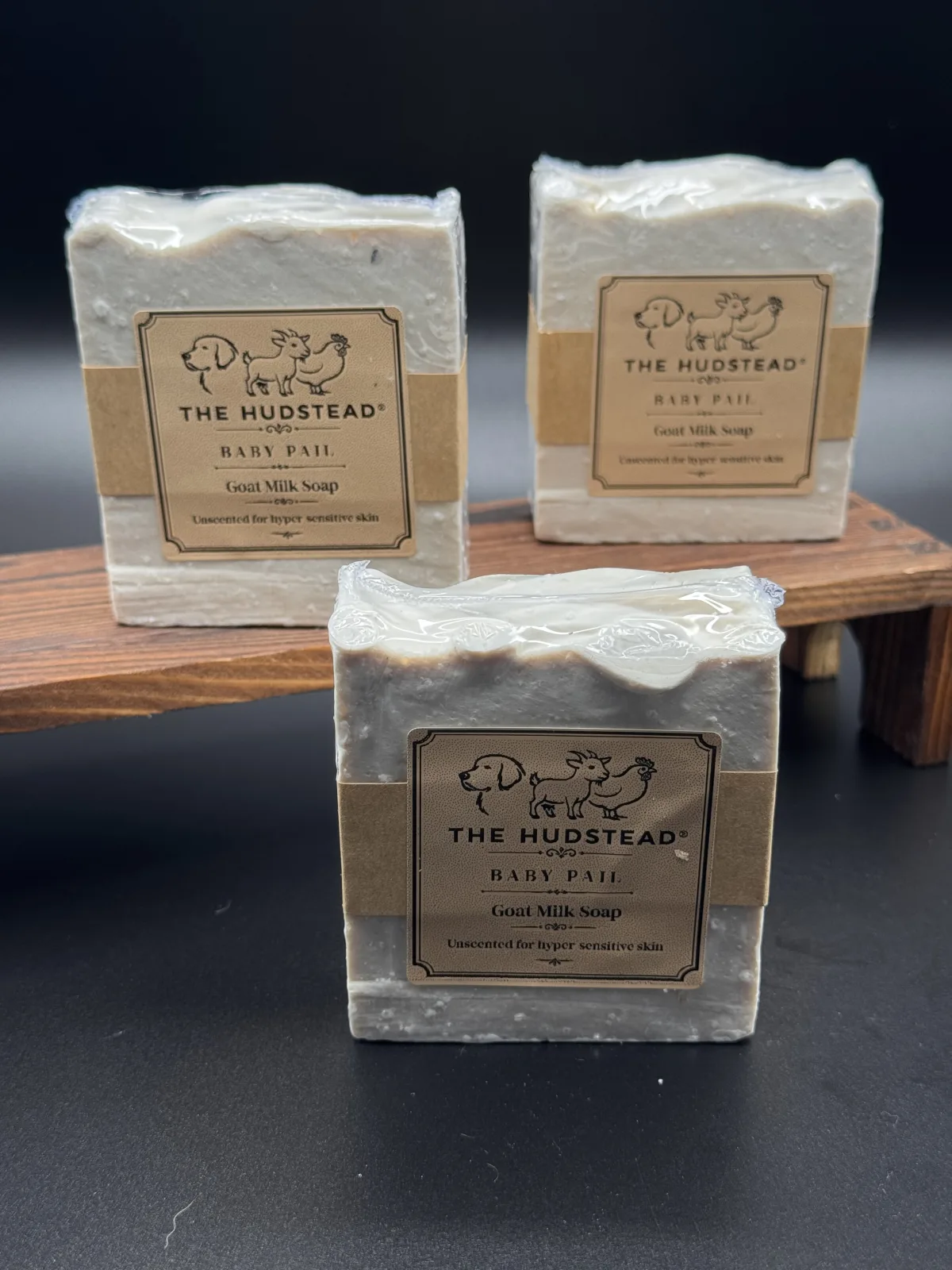
When you're choosing soap for a baby, the list of what you don't want is longer than what you do. No harsh detergents. No synthetic fragrances. No mystery ingredients you can't pronounce. Baby Pail is what's left when you strip everything away except what actually belongs on delicate skin: fresh goat milk from our own herd, a handful of gentle oils, and nothing else that doesn't need to be there.
We make it in small batches here on our family farm in Great Falls, SC, the same way we make everything else — by hand, with milk we collected that morning from our Nigerian Dwarf goats.
Why goat milk for baby's skin
Goat milk has been used for gentle skin care for hundreds of years. It contains natural fats that condition without leaving a film, and it creates a soft, creamy lather that rinses clean. Parents with babies who have sensitive skin or reactions to commercial soap often turn to goat milk because it's mild and because the ingredient list is short enough to actually understand.
Our goats live here on the farm. We milk them, and that milk goes into our soap within hours. You know where it came from because we're telling you: right here.
What's in Baby Pail and why
The full ingredient list for Baby Pail Unscented Goat Milk Soap is this: saponified oils of olive, coconut, shea butter, and castor; goat milk; titanium dioxide.
That's it. Here's what each one does:
- Olive oil makes a gentle, moisturizing lather that's been used in soap for centuries.
- Coconut oil creates bubbles and helps the bar last longer in the bath.
- Shea butter adds extra conditioning for soft skin.
- Castor oil boosts lather and helps the soap feel creamy.
- Goat milk from our own herd adds natural fats and creates that signature creamy texture.
- Titanium dioxide is a natural mineral that gives the bar its clean white color.
No fragrance oils. No essential oils. No colorants beyond the white. Babies don't need to smell like lavender or vanilla, and their skin doesn't need the extra load.
How we make it
Every bar starts with fresh goat milk. We make Baby Pail in small batches because that's the only way to control quality when you're working by hand. The milk and oils are combined, poured into molds, and left to cure for weeks. Curing is what turns soft soap into a firm bar that lasts in the tub and lathers well.
We don't rush it. A bar that cured for four weeks is milder and longer-lasting than one that only cured for two. Baby Pail gets the full cure time before it ever goes into a box.
Who it's for
We made Baby Pail for babies, but plenty of adults with sensitive skin use it too. If your skin reacts to fragrances or if you just prefer soap that doesn't smell like anything, this is the bar. It's mild enough for a newborn and simple enough for anyone who wants to know exactly what's touching their skin.
Parents also use it for toddlers who are starting to wash their own hands. The bar is firm, it doesn't turn to mush after one bath, and it rinses off without leaving soap in little eyes.
What gentle actually means
Gentle is one of those words that gets used until it doesn't mean much. Here's what it means for Baby Pail: it won't strip natural oils, it won't leave a residue, and it won't irritate skin that's easily bothered. The lather is soft, not aggressive. It cleans without scrubbing.
We don't add anything to make it lather more or smell better or look fancier, because none of that makes it work better for a baby. It's as plain as soap gets, and that's the point.
Using it at bath time
Wet the bar and rub it between your hands or directly on your baby's skin. A little goes a long way. The lather is creamy, not big and foamy, so don't expect a bubble bath's worth of suds. Rinse well with warm water.
The bar will last longer if you keep it dry between uses. Set it on a dish that drains, not in a puddle. If it sits in water, any handmade soap will soften and wear down faster.
Why we make soap on a goat farm
We moved to Great Falls over five years ago and started raising Nigerian Dwarf goats, chickens, and guardian dogs. Goat milk soap was a natural step. We had the milk, we had the time to learn the craft, and we wanted to make something useful that didn't require a factory or a supply chain we couldn't see.
Everything we make uses milk from our own herd. That's not marketing language; it's just how small farms work. The goats are here, the soap is made here, and you can visit if you want to see where it comes from.
We also make other goat milk soaps with scents like Purple Fields and Cold Creek, along with products like beard oil and aftershave balm. But Baby Pail is the one we keep unscented, because that's what parents ask for when they're looking for something safe and simple.
Questions people ask
Can I use Baby Pail on a newborn?
Yes. It's mild enough for newborn skin. Many parents prefer plain water for the first few weeks, but when you're ready to use soap, this one has a short ingredient list and no fragrance.
Will it help with eczema or other skin conditions?
We can't say it treats or cures any condition. What we can say is that parents with babies who have sensitive or easily irritated skin often choose goat milk soap because it's gentle and because they can see exactly what's in it. Some people find that switching to a simpler soap helps, but everyone's skin is different.
How long does one bar last?
It depends on how often you use it and how you store it. A bar used daily for one baby and kept dry between uses usually lasts a month or more. If it sits in water, it will soften and go faster.