Goat Milk Soap From South Carolina: Made on Our Great Falls Farm
We make goat milk soap right here in Great Falls, South Carolina. Every bar starts with milk from our own Nigerian Dwarf goats, and we control what goes into it from the feed we give the herd to the oils we blend in. People who want to know where their soap comes from tend to appreciate that.
Over five years ago, we left the coast and found this piece of land in Great Falls. The dream included goats, and once we had them, the soap followed naturally. Now we make it in small batches and ship it to families across the Carolinas who care what they put on their skin.
Why Goat Milk in Soap
Goat milk has fat and natural sugars that act as humectants. That means they pull moisture to your skin instead of just sitting on top of it. The fat content is also why goat milk soap often feels creamier than soap made with just water.
The milk contains lactic acid, which people with sensitive skin or conditions like eczema often look for because it gently breaks down dead skin without harsh scrubbing. We can't say our soap treats anything, but we can say people tell us they switched because other soaps left their skin tight or itchy.
Our Nigerian Dwarf goats are small, but their milk has a higher butterfat content than standard dairy goat breeds. That makes a difference in the finished bar.
How We Make It
We use the cold-process method. That means we mix oils with lye and goat milk at low temperatures and let the chemical reaction happen slowly. It takes four to six weeks for a batch to cure, but the result is a harder bar that lasts longer and keeps more of the beneficial compounds intact.
We don't use synthetic fragrances or dyes. Scents come from essential oils or natural extracts. Colors come from clays, plant powders or the ingredients themselves. Some of our bars have no added scent at all.
Each batch is mixed, poured, cut and wrapped by hand. We don't have machines doing the work, which means small variations from bar to bar. That's normal for a real small-batch product.
What We Offer
We make several varieties:
- Baby Pail Unscented has no fragrance and no extras, made for the littlest hands and the most sensitive skin.
- Clean Slate keeps things pure and simple with minimal ingredients.
- Purple Fields uses lavender the way it grows, not a perfume version of it.
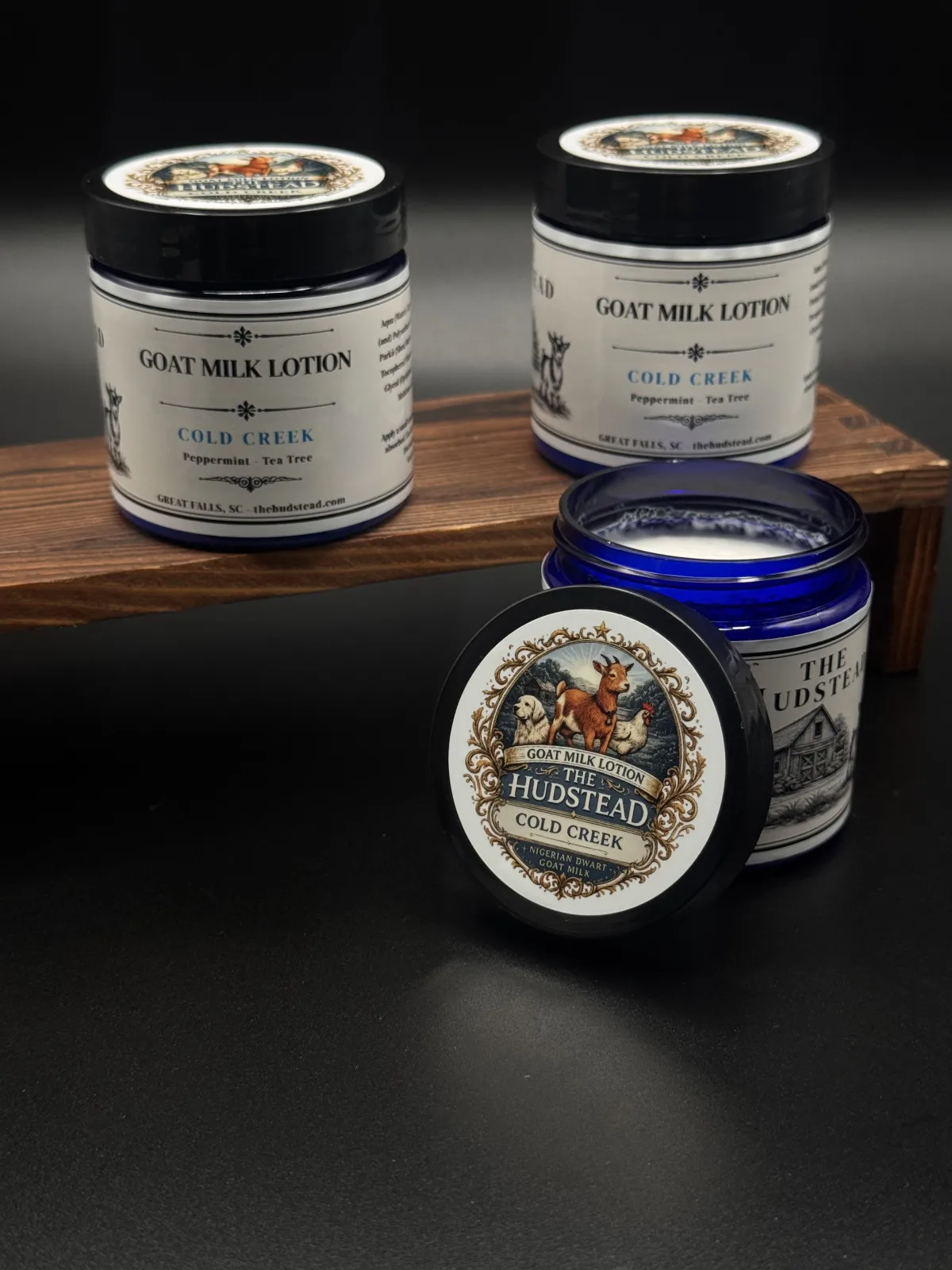
- Cold Creek has a clean, awake scent that people who work outdoors seem to prefer.
- First Light smells like a good morning on the farm, with raw Nigerian Dwarf goat milk and cold-pressed argan oil.
- Field Hand is built for the working man, with a straightforward formula that holds up to real use.
We also make goat milk shampoo, conditioner, beard oil and aftershave balm. The goats are involved in all of it.
What Makes South Carolina Goat Milk Soap Different
South Carolina has humid summers and mild winters, which affects how we raise the goats and when we make soap. High humidity means we have to be careful about cure times and storage so bars don't get soft or sweat.
Being in Great Falls, we're close enough to Charlotte and Columbia to deliver fresh products without long shipping times, but far enough out to have the land we need for the herd. People who visit the farm can see where the milk comes from. That matters to some folks.
We're not the only farm in South Carolina making goat milk soap, but we're one of the few doing it with our own herd and our own milk. No outside suppliers. No bulk milk shipments. Just our goats and our hands.
Who It's For
Our soap works for people with normal skin who just want something made from recognizable ingredients. It also works for people whose skin reacts to commercial soap or who need something gentler than what they find in a grocery store.
Parents buy the unscented bars for their kids. Men who work outside buy Field Hand because it doesn't smell like a department store. People who like lavender buy Purple Fields and keep coming back for more.
If you want to know the person who milked the goat that made your soap, we're set up for that. If you just want a good bar that feels better on your skin than what you've been using, that works too.
How to Use It
Use it like any bar soap. Wet it, lather it, rinse. Keep it in a dish that drains so it dries between uses. A wet bar sitting in water will dissolve faster than one that dries out.
We sell a soap saver dish and a sisal soap saver pouch that both help the bar last longer. The pouch also gives you a little exfoliation if you want it.
Because we don't add hardeners or synthetic preservatives, our bars are softer than commercial soap. They also don't last forever. Use them within a year for the best experience.
Where to Get It
We sell directly from the farm and ship across the Carolinas. You can order from our website or visit us in Great Falls if you want to see the operation. We also offer gift cards if you want to send a little of the farm to someone who would like it.
We do run out of certain varieties between batches, especially the popular scents. When we're out, we're out until the next batch cures. That's the trade-off with small-batch production.
Questions People Ask
Does goat milk soap smell like goats?
No. Fresh goat milk doesn't smell like a goat barn, and once it's processed into soap, there's no animal smell at all. Scented bars smell like whatever essential oil or extract we added. Unscented bars have a very mild, clean smell that most people describe as neutral or slightly sweet.
How long does a bar last?
That depends on how you use it and how you store it. A bar used daily by one person and kept dry between uses usually lasts three to four weeks. If it sits in water or gets used by a whole family, it will go faster. Our bars are softer than commercial soap because we don't add hardening agents, so proper storage makes a real difference.
Can I visit the farm and see the goats?
Yes. We're in Great Falls, and people are welcome to visit. It helps to contact us first so we can make sure someone's around, but we don't mind showing people where their soap comes from. The goats appreciate the attention, and it's good for folks to see that this is a real farm, not just a label.