Baby Pail Unscented Goat Milk Soap: Gentle Care for Delicate Skin
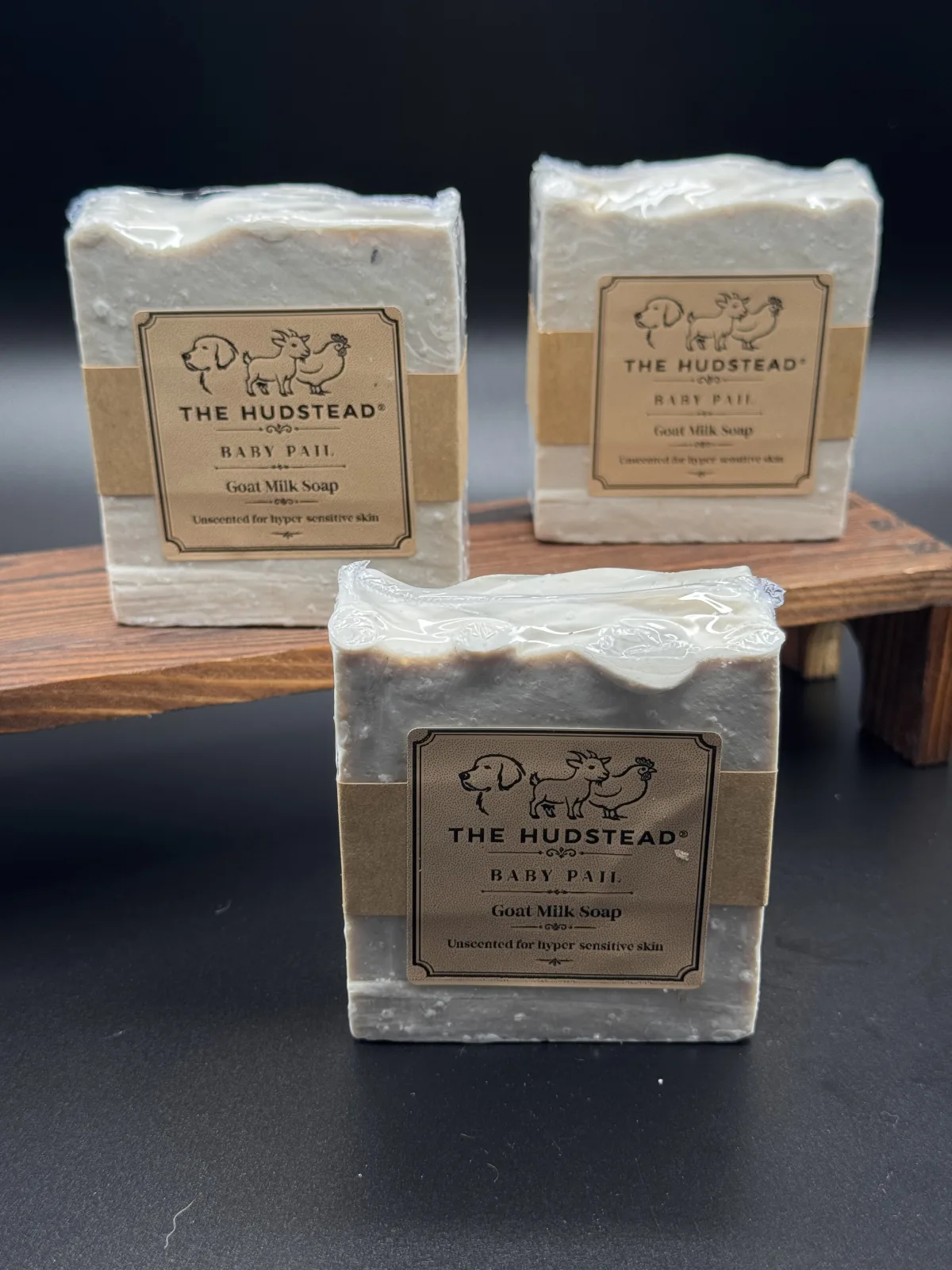
When you're choosing soap for a baby, the ingredient list matters more than the marketing. Baby Pail Unscented Goat Milk Soap is our answer to that: fresh goat milk from our herd, five simple oils, and nothing else that doesn't need to be there. No fragrance. No dyes. No long list of things you have to look up.
We make it in small batches on our family farm in Great Falls, SC, the same way we make everything here — carefully, by hand, with ingredients we know.
Why we made a soap just for babies
Baby skin is thinner than adult skin. It loses moisture faster. It reacts to things that wouldn't bother you or me. That's why parents read labels, ask questions, and sometimes just stick with water because they don't trust what's in the bottle.
We wanted to make something we'd use on our own kids. That meant keeping it simple. Goat milk is what we know — we milk our Nigerian Dwarf goats every day, and that milk goes into this soap while it's still fresh. Goat milk has fat and protein that help skin hold onto moisture. People have used it for gentle skin care for centuries, long before there were aisles of baby products.
Around that milk, we built a recipe with five oils: olive, coconut, shea butter, and castor. Each one brings something — olive for mildness, coconut for lather, shea for conditioning, castor to hold it all together. We add titanium dioxide to keep the bar a clean white. That's the whole list.
What makes goat milk soap different
Goat milk changes the soap. It makes the lather creamier, softer, less stripping. The natural fats in the milk stay in the bar after saponification, so when your baby's skin touches it, those fats are there doing what fats do — moisturizing, protecting, leaving skin soft instead of tight.
Fresh milk also means the soap has a different feel in your hand. It's denser, smoother, quieter somehow. It doesn't foam up like detergent. It just works.
We don't add fragrance to Baby Pail. Fragrance is one of the most common irritants for delicate skin, even when it's labeled natural or gentle. Unscented means your baby smells like your baby after a bath, not like synthetic lavender or chamomile.
How we make it
Every batch starts with the goats. We milk them in the morning, strain the milk, and keep it cold until we're ready to use it. When we make soap, we measure oils and milk, mix lye into the milk slowly so it doesn't scorch, then combine everything and stir until it thickens.
We pour it into molds and let it sit for a day. Then we cut it into bars and set those bars on racks to cure for four to six weeks. Curing matters. It makes the soap harder, milder, longer-lasting. A bar that skips this step will dissolve in the bath and might sting. We don't skip it.
After curing, we package each bar by hand. Small batches mean we catch problems before they leave the farm. It also means we're never making soap we don't need, never rushing a batch because we ran out.
Who Baby Pail is for
We made Baby Pail for babies, but it's also for anyone with reactive skin. Adults with eczema use it. People recovering from skin procedures use it. One customer washes her face with it every night because everything else breaks her out.
If you've tried a dozen products and your baby's skin is still dry or red or unhappy, this might be worth trying. It won't fix everything — some skin issues need a doctor — but it also won't add to the problem.
If you just want something simple and honest that does its job without a list of chemicals you can't pronounce, this is that.
Using the soap
Wet the bar and rub it between your hands or onto a soft washcloth. You'll get a light lather, creamy and mild. Wash your baby the way you always do. Rinse well. The soap won't leave a film, but it also won't strip every bit of oil off the skin.
Between uses, keep the bar somewhere it can dry out. A soap dish with drainage works. If it sits in water, it'll get soft and wear down faster. Handmade soap doesn't have the hardeners that commercial bars have, so it needs a little air.
One bar lasts a long time if you treat it right. We've had customers say a single bar lasted them three months of daily baby baths.
What else we make
Baby Pail is part of a bigger line of goat milk soap we craft here. We make Clean Slate for people who want unscented soap for themselves. We make Purple Fields with lavender from the farm. We make Field Hand Goat Milk Soap for the working man, and a shampoo bar, and a conditioner called Shampaaaa that people write us about.
All of it starts with the same goat milk and the same careful process. We're not trying to be everything to everyone. We're just making what we'd use, and sharing it with people who care where it came from.
Why we do this
Over five years ago, we left Myrtle Beach and found land in Great Falls. We wanted something different — space, animals, work that meant something. Today we raise Nigerian Dwarf goats, chickens, guardian puppies, and we make products from what the farm gives us.
The goats are the center of it. We milk them, care for them, watch them raise their kids in the spring. Their milk goes into soap, lotion, and other things we're still figuring out. We're not a factory. We're a family that decided this life made more sense than the one we had before.
When you use Baby Pail, you're using milk from goats we know by name, made into soap in a room about twenty feet from where they sleep. That's as direct as it gets.
Questions people ask
Is this soap safe for newborns?
We make it with simple, gentle ingredients and no fragrance, which is what most parents look for. Many customers use it on newborns without trouble. That said, every baby is different, and if your baby has very sensitive skin or a condition, check with your pediatrician before trying any new product.
Will it help with baby eczema or dry skin?
Goat milk soap is traditionally used by people with dry or sensitive skin because it's mild and moisturizing. We can't claim it treats eczema, but many customers tell us it's gentler than what they were using before. If your baby has a skin condition, talk to a doctor about what's safe to use alongside any treatment they recommend.
How long does one bar last?
It depends on how often you use it and how you store it. Most customers report a single bar lasts two to three months with regular baby baths, as long as the bar dries out between uses on a draining soap dish.